
Agromimicry | Aquamimicry | Livestock | Wastewater | Ornamental Pond | Odor Management



- Home
- About-Us
-
ผลิตภัณท์
-
จุลินทรีย์ปุ๋ยหมัก
- หัวเชื้อจุลินทรีย์ปุ๋ยหมัก
- หัวเชื้อจุลินทรีย์ฟื้นดิน
- หัวเขื้ออาหารจุลินทรีย์ดิน
- หัวเชื้อจุลินทรีย์ทางใบ
- เร่งดอกเพิ่มผลผลิต
- ปุ๋ยหมักคืออะไร
- วิธีทำปุ๋ยหมัก
- ค่าสัดส่วน C/N Ratio
- ปัจจัยสิ่งแวดล้อมในการทำปุ๋ยหมัก
- การประเมิน
- ปัญหาการทำปุ๋ยหมักและแนวทางแก้ไข
- อะไรคืออโกรมิมิครี่
- ทำไมถึงสูญเสียสภาพ
- ทำไมพืชจึงต้องพึงพาชีววิทยาของดิน
- บทบาทของปุ๋ยหมัก-ดิน-พืชและผลผลิต
- อโกรมิมิครี่ช่วยฟื้นฟูวงจรธรรมชาติได้อย่างไร
- จุดเชื่อมโยงที่ขาดหายไปของซากชีวมวลจุลินทรีย์
- จุลฝาสี-จุลินทรีย์เลี้ยงกุ้งปลาอินทรีย์
- จุลินทรีย์สัตว์น้ำ
-
แบ็กซ์เชล
-
จุลินทรีย์
- จุลินทรีย์เลี้ยงกุ้ง1
- จุลินทรีย์เลี้ยงกุ้ง2
- จุลินทรีย์เลี้ยงกุ้ง3
- จุลินทรีย์เลี้ยงกปลา4
- จุลินทรีย์เลี้ยงปลา5
- จุลินทรีย์บำบัดน้ำเสีย1
- จุลินทรีย์บำบัดน้ำเสีย2
- จุลินทรีย์บำบัดน้ำเสีย3
- จุลินทรีย์บำบัดน้ำเสีย4
- จุลินทรีย์บำบัดน้ำเสีย5
- จุลินทรีย์บำบัดน้ำเสีย6
- จุลินทรีย์บำบัดน้ำเสีย7
- จุลินทรีย์บำบัดน้ำเสีย8
- จุลินทรีย์บำบัดน้ำเสีย9
- จุลินทรีย์บำบัดน้ำเสีย10
- จุลินทรีย์ปุ๋ยหมัก1
- จุลินทรีย์ปุ๋ยหมัก2
- จุลินทรีย์ปุ๋ยหมัก3
- จุลินทรีย์ปุ๋ยหมัก4
- จุลินทรีย์ปุ๋ยหมัก5
- จุลินทรีย์ปุ๋ยหมัก6
- จุลินทรีย์บ่อปลาสวยงาม1
- จุลินทรีย์บ่อปลาสวยงาม2
- จุลินทรีย์บ่อปลาสวยงาม3
- จุลินทรีย์บ่อปลาสวยงาม4
- จุลินทรีย์ดับกลิ่น1
- จุลินทรีย์ดับกลิ่น2
- จุลินทรีย์ดับกลิ่น3
-
จุลินทรีย์
- บำบัดน้ำเสีย
- จุลินทรีย์ฟาร์มปศุสัตว์
- เอนไซม์ไบโอก๊าซ
- บ่อปลาสวยงาม
- เอนไซม์ดับกลิ่น
-
จุลินทรีย์ปุ๋ยหมัก
- สินค้าขายดี-แก้ปัญหา
- ข้อมูลทางชีวเทคนิค
- วิจัยเพาะเลี้ยงสัตว์น้ำ
- เรียนรู้
- ศูนย์เรียนรู้
- รับจ้างผลิตจุลินทรีย์
- ราคาผลิตภัณฑ์
- สั่งซื้อจุลินทรีย์คุณภาพสูง
-
Microbial Solutions
- Agromimicry-Agriculture
-
Aquamimicry-Aquaculture
- Aquamimicry-Caps
- Grow-Out
- Broodstock
- Hatchery
- Nursery
- Copefloc
- Problem-Protocols
- Fermentation-Protocol
-
Aquamimicry-Shrimp
- What-is-Aquamimicry
- Global-Shrimp-Farming-Problems
- Aquaculture-Aged-Ponds
- Chain-Dragging
- pH
- Alkalinity
- Synbiotics-for-Aquaculture
- SCP-Single-Cell-Protein
- Autotrophs
- Heterotrophs
- Balances-Heterotrophs-and-Autotrophs
- Pond-Water-Dynamics
- Aquamimicry-RAS
- Aquamimicry-Research-Paper
- EMS
- Memories
- Conference
- Exhibitions
- Aquamimicry-Aquatainments
- Demonstration-Farm
- Aquamimicry-Aquaculture-Alliance
- Protocol
- Trouble-Shooting
- Aquamimicry-Enzymes
-
Probiotics-for-Aquaculture
- Baxel-Tab-Probiotics-Competitive-Exclusion
- Baxel-Tab-Enzymes-Sludge-Digester
- A1-Probiotics-for-Aquaculture
- A2-Probiotics-for-Aquaculture
- Aquasis-Powder-Probiotics-Aquaculture
- Aquasis-Liquid-Probiotics-Aquaculture
- Probiotic-Tablet
- Enzymes-Tablet
- Aquaculture-1
- Aquaculture-2
- Aquaculture-3
- Aquaculture-4
- Aquaculture-5
- Aquaculture-6
- Aquaculture-7
- Aqua Backup
-
Wastewater-Treatment-Microbes
- Septic-Tank-Back-Up-Odor-Problem-Bacteria-Product
- Slow-Running-Kitchen-Drain-Lines-Bacteria-Product
- High-BOD-COD-SS-FOG-Problem-Bacteria-Product
- Bulking-Sludge-Problem-Bacteria-Product
- Hydrocarbon-Oil-Spill-Degrader-Bacteria-Product
- Wastewater-Evaluation-Form
- Wastewater-Treatment-FAQ
- Wastewater-Treatment
- Livestock-Waste-Microbes
- Biogas-Enzymes-Booster
- Koi-Pond-Microbes
- Odor-Removal-Enzymes
- Best Sellers
- Biotechnical
- BioMarket
- Research-Papers
- Aquamimicry-Center
- Private-Label
- Price
AQUAMIMICRY
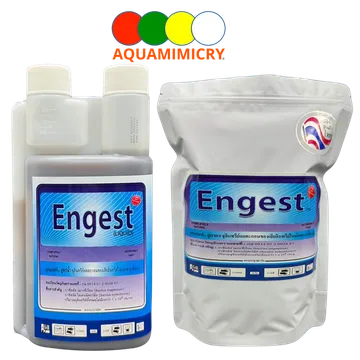
Application rate with maximum depth of 1 meter (high aeration system only) :
Super Intensive:
- 80-160 gram | ml per 1,000 sqm2 of pond area.
Intensive:
- 40-80 gram | ml per 1,000 sqm2 of pond area.
Extensive:
- 20-40 gram | ml per 1,000 sqm2 of pond area.
Direction for use:
- Dissolves EngestTM with 20 liters of water and apply directly into the pond.
- The application rate may vary, depending upon an organic accumulation from the system.
- The same application rate can be repeat the next day if necessary.
- Alkalinity above 180 ppm.
- The same application rate can be repeat the next day if necessary.
- Check for minerals (i.e. Ca+, Mg+, K+) and vibrio plate count before and after.
Biofilm formation in shrimp farming ponds poses a significant challenge to aquaculture productivity and sustainability. AQUAMIMICRY® provides an effective solution by specifically targeting biofilm matrices, promoting a synbiotic environment, and being both environmentally friendly and biodegradable. By following a systematic protocol for AQUAMIMICRY® application, shrimp farmers can manage biofilm formation, improve water quality, and enhance shrimp health and growth, contributing to a more sustainable and productive aquaculture industry.
Protocol : Lab Lab Formation Problem
Protocol : Lab Lab Formation Problem
Lab-Lab (benthic microbial mats) consists of dense communities of microorganisms, algae, and organic matter held together by a self-produced extracellular polymeric matrix (EPS).
Although Lab-Lab can serve as a valuable natural food source for aquatic organisms under balanced conditions, excessive accumulation and deterioration may lead to poor water quality, the buildup of decomposing organic matter, and conditions that favor the proliferation of harmful microorganisms. These unfavorable conditions can negatively affect shrimp health and growth.
- Digest biofilm formation at the pond bottom.
- Advantages of being both specifically and non toxic.
- Creates synbiotics environment in situ.
- Environmental friendly, biodegradable component for broader activity spectrum.
- Works well in fresh and seawater shrimp farming.