
Agromimicry | Aquamimicry | Livestock | Wastewater | Ornamental Pond | Odor Management



- Home
- About-Us
-
ผลิตภัณท์
-
จุลินทรีย์ปุ๋ยหมัก
- หัวเชื้อจุลินทรีย์ปุ๋ยหมัก
- หัวเชื้อจุลินทรีย์ฟื้นดิน
- หัวเขื้ออาหารจุลินทรีย์ดิน
- หัวเชื้อจุลินทรีย์ทางใบ
- เร่งดอกเพิ่มผลผลิต
- ปุ๋ยหมักคืออะไร
- วิธีทำปุ๋ยหมัก
- ค่าสัดส่วน C/N Ratio
- ปัจจัยสิ่งแวดล้อมในการทำปุ๋ยหมัก
- การประเมิน
- ปัญหาการทำปุ๋ยหมักและแนวทางแก้ไข
- อะไรคืออโกรมิมิครี่
- ทำไมถึงสูญเสียสภาพ
- ทำไมพืชจึงต้องพึงพาชีววิทยาของดิน
- บทบาทของปุ๋ยหมัก-ดิน-พืชและผลผลิต
- อโกรมิมิครี่ช่วยฟื้นฟูวงจรธรรมชาติได้อย่างไร
- จุดเชื่อมโยงที่ขาดหายไปของซากชีวมวลจุลินทรีย์
- จุลฝาสี-จุลินทรีย์เลี้ยงกุ้งปลาอินทรีย์
- จุลินทรีย์สัตว์น้ำ
-
แบ็กซ์เชล
-
จุลินทรีย์
- จุลินทรีย์เลี้ยงกุ้ง1
- จุลินทรีย์เลี้ยงกุ้ง2
- จุลินทรีย์เลี้ยงกุ้ง3
- จุลินทรีย์เลี้ยงกปลา4
- จุลินทรีย์เลี้ยงปลา5
- จุลินทรีย์บำบัดน้ำเสีย1
- จุลินทรีย์บำบัดน้ำเสีย2
- จุลินทรีย์บำบัดน้ำเสีย3
- จุลินทรีย์บำบัดน้ำเสีย4
- จุลินทรีย์บำบัดน้ำเสีย5
- จุลินทรีย์บำบัดน้ำเสีย6
- จุลินทรีย์บำบัดน้ำเสีย7
- จุลินทรีย์บำบัดน้ำเสีย8
- จุลินทรีย์บำบัดน้ำเสีย9
- จุลินทรีย์บำบัดน้ำเสีย10
- จุลินทรีย์ปุ๋ยหมัก1
- จุลินทรีย์ปุ๋ยหมัก2
- จุลินทรีย์ปุ๋ยหมัก3
- จุลินทรีย์ปุ๋ยหมัก4
- จุลินทรีย์ปุ๋ยหมัก5
- จุลินทรีย์ปุ๋ยหมัก6
- จุลินทรีย์บ่อปลาสวยงาม1
- จุลินทรีย์บ่อปลาสวยงาม2
- จุลินทรีย์บ่อปลาสวยงาม3
- จุลินทรีย์บ่อปลาสวยงาม4
- จุลินทรีย์ดับกลิ่น1
- จุลินทรีย์ดับกลิ่น2
- จุลินทรีย์ดับกลิ่น3
-
จุลินทรีย์
- บำบัดน้ำเสีย
- จุลินทรีย์ฟาร์มปศุสัตว์
- เอนไซม์ไบโอก๊าซ
- บ่อปลาสวยงาม
- เอนไซม์ดับกลิ่น
-
จุลินทรีย์ปุ๋ยหมัก
- สินค้าขายดี-แก้ปัญหา
- ข้อมูลทางชีวเทคนิค
- วิจัยเพาะเลี้ยงสัตว์น้ำ
- เรียนรู้
- ศูนย์เรียนรู้
- รับจ้างผลิตจุลินทรีย์
- ราคาผลิตภัณฑ์
- สั่งซื้อจุลินทรีย์คุณภาพสูง
-
Microbial Solutions
- Agromimicry-Agriculture
-
Aquamimicry-Aquaculture
- Aquamimicry-Caps
- Grow-Out
- Broodstock
- Hatchery
- Nursery
- Copefloc
- Problem-Protocols
- Fermentation-Protocol
-
Aquamimicry-Shrimp
- What-is-Aquamimicry
- Global-Shrimp-Farming-Problems
- Aquaculture-Aged-Ponds
- Chain-Dragging
- pH
- Alkalinity
- Synbiotics-for-Aquaculture
- SCP-Single-Cell-Protein
- Autotrophs
- Heterotrophs
- Balances-Heterotrophs-and-Autotrophs
- Pond-Water-Dynamics
- Aquamimicry-RAS
- Aquamimicry-Research-Paper
- EMS
- Memories
- Conference
- Exhibitions
- Aquamimicry-Aquatainments
- Demonstration-Farm
- Aquamimicry-Aquaculture-Alliance
- Protocol
- Trouble-Shooting
- Aquamimicry-Enzymes
-
Probiotics-for-Aquaculture
- Baxel-Tab-Probiotics-Competitive-Exclusion
- Baxel-Tab-Enzymes-Sludge-Digester
- A1-Probiotics-for-Aquaculture
- A2-Probiotics-for-Aquaculture
- Aquasis-Powder-Probiotics-Aquaculture
- Aquasis-Liquid-Probiotics-Aquaculture
- Probiotic-Tablet
- Enzymes-Tablet
- Aquaculture-1
- Aquaculture-2
- Aquaculture-3
- Aquaculture-4
- Aquaculture-5
- Aquaculture-6
- Aquaculture-7
- Aqua Backup
-
Wastewater-Treatment-Microbes
- Septic-Tank-Back-Up-Odor-Problem-Bacteria-Product
- Slow-Running-Kitchen-Drain-Lines-Bacteria-Product
- High-BOD-COD-SS-FOG-Problem-Bacteria-Product
- Bulking-Sludge-Problem-Bacteria-Product
- Hydrocarbon-Oil-Spill-Degrader-Bacteria-Product
- Wastewater-Evaluation-Form
- Wastewater-Treatment-FAQ
- Wastewater-Treatment
- Livestock-Waste-Microbes
- Biogas-Enzymes-Booster
- Koi-Pond-Microbes
- Odor-Removal-Enzymes
- Best Sellers
- Biotechnical
- BioMarket
- Research-Papers
- Aquamimicry-Center
- Private-Label
- Price
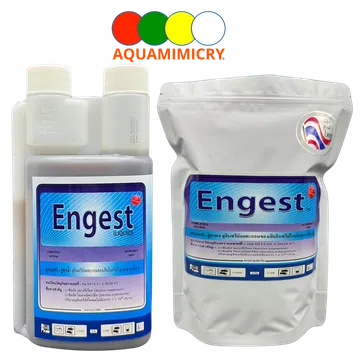
Engest
Synbiotics Herb Protocol
Application Protocol for Fermented Herbs (FH)
Ingredients and Ratios:
- Onion: 2.5 kg (chopped)
- Garlic: 2.5 kg (chopped)
- Ginger: 2.5 kg (chopped)
- Turmeric: 2.5 kg (chopped)
- EngestTM: 200 gram/ml (20 gram/ml per 1 kg of herb mixture)
- NaHCO3: 1 kg (10% based on the total weight of herbs)
- Water: 100 liters
Fermentation Process:
- Preparation: Chop the onion, garlic, ginger, and turmeric.
- Mixing: Combine the chopped herbs, EngestTM, NaHCO3, and water in a fermentation tank.
- Fermentation:
- Allow the mixture to ferment for at least 7 days, stirring well occasionally.
- No aeration is required during this process.
- Storage:
- The FH solution can be stored for a maximum of 30 days after the first use.
- To extend its usability, add aeration until the solution is finished.
- Preparation for Use:
- Stir the solution manually before each use.
- Mix 50-200 ml of FH per 1 kg of pellet feed and mix thoroughly.
- Keep the mixture moist in a bag for at least 24 hours before feeding shrimp and fish.
The Fermented Herbs (FH) protocol with AQUAMIMICRY® offers a comprehensive solution for improving shrimp health and farming efficiency. By incorporating this protocol, shrimp farmers can significantly enhance the health of their shrimp, reduce disease risks, and improve growth rates and feed conversion ratios.
Protocol : Fermented Herbs (FH)
Protocol : Fermented Herbs (FH)
Fermented Herbs (FH) using AQUAMIMICRY®, which includes onion, garlic, ginger, and turmeric, offers numerous benefits for shrimp farming. This protocol aims to improve the health of the hepatopancreas and digestive system, promote the growth of beneficial gut bacteria, enhance digestion and nutrient absorption, reduce the risk of infections and diseases, hydrolyze shrimp feed, and improve growth rate and feed conversion ratio (FCR). It is suitable for both fresh and seawater shrimp farming.
- Enhances the health of the hepatopancreas and digestive system in shrimp.
- Prebiotics in the fermented herbs promote the growth of beneficial gut bacteria in aquatic species.
- Improves digestion and nutrient absorption, contributing to better overall shrimp health.
- Reduces the risk of infections and diseases, including the suppression of white feces diseases.
- Hydrolyzes shrimp feed, making nutrients more accessible.
- Enhances growth rate and improves feed conversion ratio (FCR).
- Suitable for enhancing performance in both fresh and seawater shrimp farming.