
Agromimicry | Aquamimicry | Livestock | Wastewater | Ornamental Pond | Odor Management


- Home
- About-Us
-
ผลิตภัณท์
-
จุลินทรีย์ปุ๋ยหมัก
- หัวเชื้อจุลินทรีย์ปุ๋ยหมัก
- หัวเชื้อจุลินทรีย์ฟื้นดิน
- หัวเขื้ออาหารจุลินทรีย์ดิน
- หัวเชื้อจุลินทรีย์ทางใบ
- เร่งดอกเพิ่มผลผลิต
- ปุ๋ยหมักคืออะไร
- วิธีทำปุ๋ยหมัก
- ค่าสัดส่วน C/N Ratio
- ปัจจัยสิ่งแวดล้อมในการทำปุ๋ยหมัก
- การประเมิน
- ปัญหาการทำปุ๋ยหมักและแนวทางแก้ไข
- อะไรคืออโกรมิมิครี่
- ทำไมถึงสูญเสียสภาพ
- ทำไมพืชจึงต้องพึงพาชีววิทยาของดิน
- บทบาทของปุ๋ยหมัก-ดิน-พืชและผลผลิต
- อโกรมิมิครี่ช่วยฟื้นฟูวงจรธรรมชาติได้อย่างไร
- จุดเชื่อมโยงที่ขาดหายไปของซากชีวมวลจุลินทรีย์
- จุลฝาสี-จุลินทรีย์เลี้ยงกุ้งปลาอินทรีย์
- จุลินทรีย์สัตว์น้ำ
-
แบ็กซ์เชล
-
จุลินทรีย์
- จุลินทรีย์เลี้ยงกุ้ง1
- จุลินทรีย์เลี้ยงกุ้ง2
- จุลินทรีย์เลี้ยงกุ้ง3
- จุลินทรีย์เลี้ยงกปลา4
- จุลินทรีย์เลี้ยงปลา5
- จุลินทรีย์บำบัดน้ำเสีย1
- จุลินทรีย์บำบัดน้ำเสีย2
- จุลินทรีย์บำบัดน้ำเสีย3
- จุลินทรีย์บำบัดน้ำเสีย4
- จุลินทรีย์บำบัดน้ำเสีย5
- จุลินทรีย์บำบัดน้ำเสีย6
- จุลินทรีย์บำบัดน้ำเสีย7
- จุลินทรีย์บำบัดน้ำเสีย8
- จุลินทรีย์บำบัดน้ำเสีย9
- จุลินทรีย์บำบัดน้ำเสีย10
- จุลินทรีย์ปุ๋ยหมัก1
- จุลินทรีย์ปุ๋ยหมัก2
- จุลินทรีย์ปุ๋ยหมัก3
- จุลินทรีย์ปุ๋ยหมัก4
- จุลินทรีย์ปุ๋ยหมัก5
- จุลินทรีย์ปุ๋ยหมัก6
- จุลินทรีย์บ่อปลาสวยงาม1
- จุลินทรีย์บ่อปลาสวยงาม2
- จุลินทรีย์บ่อปลาสวยงาม3
- จุลินทรีย์บ่อปลาสวยงาม4
- จุลินทรีย์ดับกลิ่น1
- จุลินทรีย์ดับกลิ่น2
- จุลินทรีย์ดับกลิ่น3
-
จุลินทรีย์
- บำบัดน้ำเสีย
- จุลินทรีย์ฟาร์มปศุสัตว์
- เอนไซม์ไบโอก๊าซ
- บ่อปลาสวยงาม
- เอนไซม์ดับกลิ่น
-
จุลินทรีย์ปุ๋ยหมัก
- สินค้าขายดี-แก้ปัญหา
- ข้อมูลทางชีวเทคนิค
- วิจัยเพาะเลี้ยงสัตว์น้ำ
- เรียนรู้
- ศูนย์เรียนรู้
- รับจ้างผลิตจุลินทรีย์
- ราคาผลิตภัณฑ์
- สั่งซื้อจุลินทรีย์คุณภาพสูง
-
Microbial Solutions
- Agromimicry-Agriculture
-
Aquamimicry-Aquaculture
- Aquamimicry-Caps
- Grow-Out
- Broodstock
- Hatchery
- Nursery
- Copefloc
- Problem-Protocols
- Fermentation-Protocol
-
Aquamimicry-Shrimp
- What-is-Aquamimicry
- Global-Shrimp-Farming-Problems
- Aquaculture-Aged-Ponds
- Chain-Dragging
- pH
- Alkalinity
- Synbiotics-for-Aquaculture
- SCP-Single-Cell-Protein
- Autotrophs
- Heterotrophs
- Balances-Heterotrophs-and-Autotrophs
- Pond-Water-Dynamics
- Aquamimicry-RAS
- Aquamimicry-Research-Paper
- EMS
- Memories
- Conference
- Exhibitions
- Aquamimicry-Aquatainments
- Demonstration-Farm
- Aquamimicry-Aquaculture-Alliance
- Protocol
- Trouble-Shooting
- Aquamimicry-Enzymes
-
Probiotics-for-Aquaculture
- Baxel-Tab-Probiotics-Competitive-Exclusion
- Baxel-Tab-Enzymes-Sludge-Digester
- A1-Probiotics-for-Aquaculture
- A2-Probiotics-for-Aquaculture
- Aquasis-Powder-Probiotics-Aquaculture
- Aquasis-Liquid-Probiotics-Aquaculture
- Probiotic-Tablet
- Enzymes-Tablet
- Aquaculture-1
- Aquaculture-2
- Aquaculture-3
- Aquaculture-4
- Aquaculture-5
- Aquaculture-6
- Aquaculture-7
- Aqua Backup
-
Wastewater-Treatment-Microbes
- Septic-Tank-Back-Up-Odor-Problem-Bacteria-Product
- Slow-Running-Kitchen-Drain-Lines-Bacteria-Product
- High-BOD-COD-SS-FOG-Problem-Bacteria-Product
- Bulking-Sludge-Problem-Bacteria-Product
- Hydrocarbon-Oil-Spill-Degrader-Bacteria-Product
- Wastewater-Evaluation-Form
- Wastewater-Treatment-FAQ
- Wastewater-Treatment
- Livestock-Waste-Microbes
- Biogas-Enzymes-Booster
- Koi-Pond-Microbes
- Odor-Removal-Enzymes
- Best Sellers
- Biotechnical
- BioMarket
- Research-Papers
- Aquamimicry-Center
- Private-Label
- Price
AQUAMIMICRY
Copefloc for Intensive Shrimp Farming
Set up:
Set up:
- Intensive culture : 200 cubic meters (100 ppm)
- Raw untreated seawater or fish pond water.
Application for preparation before stocking:
- Rice Bran : 20 kg (100 ppm at one time)
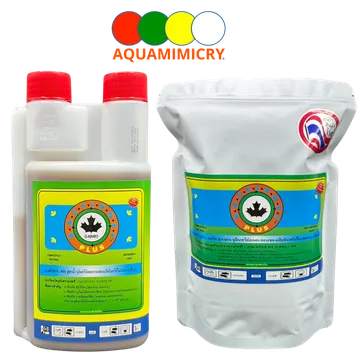
- BactipostTM Plus : 200 gram/ml (10 gram/ml per kilogram of rice bran)
- NaHCO3 : 2 kg (10% base on total weight of rice bran)
- Water : 80 liter
- Ensure the tank is large enough (at least 3 times larger than the solution to be fermented).
- Ferment the mixture for at least 24 hours, stirring occasionally.
- Filter the mixture well and broadcast only the liquid throughout the tank while aeration is on.
- Reprocess the filtered rice bran residue in the fermentation tank until it is fully dissolved or pulverize it into a liquid form.
- Maintain dissolved oxygen (D.O.) levels above 5-6 ppm at all times.
- Keep tank alkalinity above 180 ppm.
- Ensure there are no dead spots in the tank to maintain uniform conditions.
Maintains natural live feed after stocking (Daily):
- Pond Capacity: 200 cubic meter (10 ppm)
- Rice Bran : 2 kg (10 ppm or 1 kg of rice bran per 100 cum3)
- BactipostTM Plus : 20 gram/ml (10 gram/ml per 1 kg of rice bran)
- NaHCO3 : 200 gram (10% base on total weight of rice bran)
- Water : 8 liter
- Ensure the tank is large enough (at least 3 times larger than the solution to be fermented).
- Ferment the mixture for at least 24 hours, stirring occasionally.
- Filter the mixture well and broadcast only the liquid throughout the tank while aeration is on.
- Reprocess the filtered rice bran residue in the fermentation tank until it is fully dissolved or pulverize it into a liquid form.
- Maintain dissolved oxygen (D.O.) levels above 5-6 ppm at all times.
- Keep tank alkalinity above 180 ppm.
- Ensure there are no dead spots in the tank to maintain uniform conditions.
- Once the turbidity of the pond reaches 30 cm or less, stop applying fermented rice bran (FRB) and maintain turbidity at 25-30 cm throughout the cycle.
This protocol is designed to foster a robust microbial community and harness the benefits of natural synbiotics to support shrimp development from post-larvae to juvenile stages.
Grow Out : Copefloc Protocol
Grow Out : Copefloc Protocol
The Grow Out Copefloc Protocol using Aquamimicry® provides a comprehensive approach to maintaining a healthy and productive pond environment in shrimp farming. By establishing a robust microbial community and utilizing natural synbiotics, this protocol supports the growth and development of shrimp from post-larvae to the juvenile stage. Proper implementation and regular maintenance of this protocol can significantly enhance the efficiency and sustainability of shrimp farming operations, leading to healthier shrimp and improved productivity.
- Ideal starter for Copefloc systems, promoting the growth of copepods and rotifers in high aeration environments.
- It provides a potent source of natural synbiotics, enriching the pond with beneficial prebiotics and probiotics that foster a healthy aquatic ecosystem.
- The protocol supports the use of natural copepods (zooplankton) as feed from post-larvae to juvenile stages, reducing the need for artificial feeds and enhancing sustainability.
- By cultivating a strong microbial community, the protocol ensures a stable and healthy pond environment that supports natural processes vital for shrimp health.
- The protocol leverages natural synbiotics, which combine prebiotics and probiotics, to create a balanced and enriched microbial environment in situ. This promotes better nutrient absorption and overall health of the shrimp.
- By supporting the use of natural copepods (zooplankton) as feed, the protocol reduces dependency on artificial feeds. This not only lowers the cost of farming but also enhances the nutritional quality of the shrimp, leading to better growth and sustainability.