
Agromimicry | Aquamimicry | Livestock | Wastewater | Ornamental Pond | Odor Management


- Home
- About-Us
-
ผลิตภัณท์
-
จุลินทรีย์ปุ๋ยหมัก
- หัวเชื้อจุลินทรีย์ปุ๋ยหมัก
- หัวเชื้อจุลินทรีย์ฟื้นดิน
- หัวเขื้ออาหารจุลินทรีย์ดิน
- หัวเชื้อจุลินทรีย์ทางใบ
- เร่งดอกเพิ่มผลผลิต
- ปุ๋ยหมักคืออะไร
- วิธีทำปุ๋ยหมัก
- ค่าสัดส่วน C/N Ratio
- ปัจจัยสิ่งแวดล้อมในการทำปุ๋ยหมัก
- การประเมิน
- ปัญหาการทำปุ๋ยหมักและแนวทางแก้ไข
- อะไรคืออโกรมิมิครี่
- ทำไมถึงสูญเสียสภาพ
- ทำไมพืชจึงต้องพึงพาชีววิทยาของดิน
- บทบาทของปุ๋ยหมัก-ดิน-พืชและผลผลิต
- อโกรมิมิครี่ช่วยฟื้นฟูวงจรธรรมชาติได้อย่างไร
- จุดเชื่อมโยงที่ขาดหายไปของซากชีวมวลจุลินทรีย์
- จุลฝาสี-จุลินทรีย์เลี้ยงกุ้งปลาอินทรีย์
- จุลินทรีย์สัตว์น้ำ
-
แบ็กซ์เชล
-
จุลินทรีย์
- จุลินทรีย์เลี้ยงกุ้ง1
- จุลินทรีย์เลี้ยงกุ้ง2
- จุลินทรีย์เลี้ยงกุ้ง3
- จุลินทรีย์เลี้ยงกปลา4
- จุลินทรีย์เลี้ยงปลา5
- จุลินทรีย์บำบัดน้ำเสีย1
- จุลินทรีย์บำบัดน้ำเสีย2
- จุลินทรีย์บำบัดน้ำเสีย3
- จุลินทรีย์บำบัดน้ำเสีย4
- จุลินทรีย์บำบัดน้ำเสีย5
- จุลินทรีย์บำบัดน้ำเสีย6
- จุลินทรีย์บำบัดน้ำเสีย7
- จุลินทรีย์บำบัดน้ำเสีย8
- จุลินทรีย์บำบัดน้ำเสีย9
- จุลินทรีย์บำบัดน้ำเสีย10
- จุลินทรีย์ปุ๋ยหมัก1
- จุลินทรีย์ปุ๋ยหมัก2
- จุลินทรีย์ปุ๋ยหมัก3
- จุลินทรีย์ปุ๋ยหมัก4
- จุลินทรีย์ปุ๋ยหมัก5
- จุลินทรีย์ปุ๋ยหมัก6
- จุลินทรีย์บ่อปลาสวยงาม1
- จุลินทรีย์บ่อปลาสวยงาม2
- จุลินทรีย์บ่อปลาสวยงาม3
- จุลินทรีย์บ่อปลาสวยงาม4
- จุลินทรีย์ดับกลิ่น1
- จุลินทรีย์ดับกลิ่น2
- จุลินทรีย์ดับกลิ่น3
-
จุลินทรีย์
- บำบัดน้ำเสีย
- จุลินทรีย์ฟาร์มปศุสัตว์
- เอนไซม์ไบโอก๊าซ
- บ่อปลาสวยงาม
- เอนไซม์ดับกลิ่น
-
จุลินทรีย์ปุ๋ยหมัก
- สินค้าขายดี-แก้ปัญหา
- ข้อมูลทางชีวเทคนิค
- วิจัยเพาะเลี้ยงสัตว์น้ำ
- เรียนรู้
- ศูนย์เรียนรู้
- รับจ้างผลิตจุลินทรีย์
- ราคาผลิตภัณฑ์
- สั่งซื้อจุลินทรีย์คุณภาพสูง
-
Microbial Solutions
- Agromimicry-Agriculture
-
Aquamimicry-Aquaculture
- Aquamimicry-Caps
- Grow-Out
- Broodstock
- Hatchery
- Nursery
- Copefloc
- Problem-Protocols
- Fermentation-Protocol
-
Aquamimicry-Shrimp
- What-is-Aquamimicry
- Global-Shrimp-Farming-Problems
- Aquaculture-Aged-Ponds
- Chain-Dragging
- pH
- Alkalinity
- Synbiotics-for-Aquaculture
- SCP-Single-Cell-Protein
- Autotrophs
- Heterotrophs
- Balances-Heterotrophs-and-Autotrophs
- Pond-Water-Dynamics
- Aquamimicry-RAS
- Aquamimicry-Research-Paper
- EMS
- Memories
- Conference
- Exhibitions
- Aquamimicry-Aquatainments
- Demonstration-Farm
- Aquamimicry-Aquaculture-Alliance
- Protocol
- Trouble-Shooting
- Aquamimicry-Enzymes
-
Probiotics-for-Aquaculture
- Baxel-Tab-Probiotics-Competitive-Exclusion
- Baxel-Tab-Enzymes-Sludge-Digester
- A1-Probiotics-for-Aquaculture
- A2-Probiotics-for-Aquaculture
- Aquasis-Powder-Probiotics-Aquaculture
- Aquasis-Liquid-Probiotics-Aquaculture
- Probiotic-Tablet
- Enzymes-Tablet
- Aquaculture-1
- Aquaculture-2
- Aquaculture-3
- Aquaculture-4
- Aquaculture-5
- Aquaculture-6
- Aquaculture-7
- Aqua Backup
-
Wastewater-Treatment-Microbes
- Septic-Tank-Back-Up-Odor-Problem-Bacteria-Product
- Slow-Running-Kitchen-Drain-Lines-Bacteria-Product
- High-BOD-COD-SS-FOG-Problem-Bacteria-Product
- Bulking-Sludge-Problem-Bacteria-Product
- Hydrocarbon-Oil-Spill-Degrader-Bacteria-Product
- Wastewater-Evaluation-Form
- Wastewater-Treatment-FAQ
- Wastewater-Treatment
- Livestock-Waste-Microbes
- Biogas-Enzymes-Booster
- Koi-Pond-Microbes
- Odor-Removal-Enzymes
- Best Sellers
- Biotechnical
- BioMarket
- Research-Papers
- Aquamimicry-Center
- Private-Label
- Price
AQUAMIMICRY
Application during rearing stages:
Zoea stage:
- 0.5 ml per ton of water.
Mysis stage:
- 1 ml per ton of water.
Post larvae stage:
- 1-2 ml per ton of water.
- If problem still exist, can repeat 2 or 3 application per day.
Zoothamnium:
- 5 ml per ton of water.
- If problem still exist, can repeat 2 or 3 application per day
Guide Line:
- The rate of application may vary depending on the organic accumulation in the pond system. It is essential to tailor the application rate to the specific conditions of the pond.
- If necessary, the same application rate can be repeated the next day to achieve the desired water quality.
- It is crucial to check for alkalinity, mineral content, and vibrio plate count before and after application. This ensures that the water parameters remain within optimal ranges for the health of aquatic organisms.
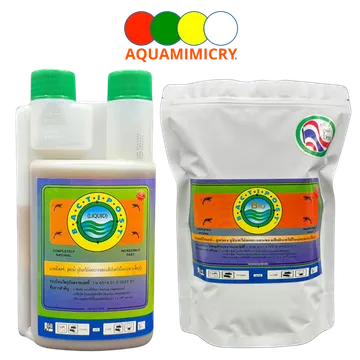
AQUAMIMICRY® is a comprehensive solution for enhancing water quality in hatcheries, addressing key challenges such as protein foam, turbidity, pathogenic bacteria, and nutrient imbalances. By facilitating the nitrogen cycle and reducing the need for frequent water exchanges, AQUAMIMICRY® promotes a healthier and more sustainable pond environment. Adopting AQUAMIMICRY® in hatchery operations can lead to improved survival rates, better growth, and overall productivity, contributing to the success and sustainability of aquaculture practices
Hatchery : Enhances Healthy Pond Water
Hatchery : Enhances Healthy Pond Water
Maintaining optimal water quality is critical in hatchery operations, directly influencing the health and growth of aquatic organisms. One effective solution for enhancing pond water quality is to apply AQUAMIMICRY®, a product designed to address various water treatment challenges in hatcheries, promoting a healthy pond environment.
- Reduces sticky protein foam in ponds.
- Improves transparency of pond water.
- Reduces formation of zoothamnium.
- Facilitates the nitrogen cycle, reducing TAN (total ammonia nitrogen), nitrite, and nitrate.
- Competitively excludes pathogenic bacteria.
- Reduces suspended solids, BOD, and COD, thereby increasing dissolved oxygen levels in situ.
- Reduces the need for water exchanges.
- Effective in both fresh and seawater environments